

In the ever-evolving world of technology, the rivalry between Meta (formerly Facebook) and Google has become increasingly intense, with both giants vying for a larger slice of the digital landscape. As we look ahead to 2026, the question on everyone’s mind is: which of these tech behemoths will emerge victorious in the battle for digital supremacy?
The Rise of Meta’s Metaverse
Meta, formerly known as Facebook, has been making bold moves to cement its position as a leader in the virtual reality (VR) and augmented reality (AR) space. With the launch of its ambitious Metaverse project, the company is aiming to redefine the way we interact with the digital world. By blending physical and virtual realms, Meta aims to create an immersive, fully-realized digital ecosystem that could potentially disrupt traditional modes of communication, commerce, and even social interaction.
The Metaverse: Meta’s Vision for the Future of the Internet
Google’s Dominance in Search and AI
On the other hand, Google has long been the undisputed king of the search engine industry, with its powerful algorithms and vast trove of data fueling its dominance. In recent years, the tech giant has also made significant strides in the field of artificial intelligence (AI), with its advanced language models and machine learning capabilities being employed across a wide range of applications.
Google’s AI Breakthroughs: Shaping the Future of Search and Beyond
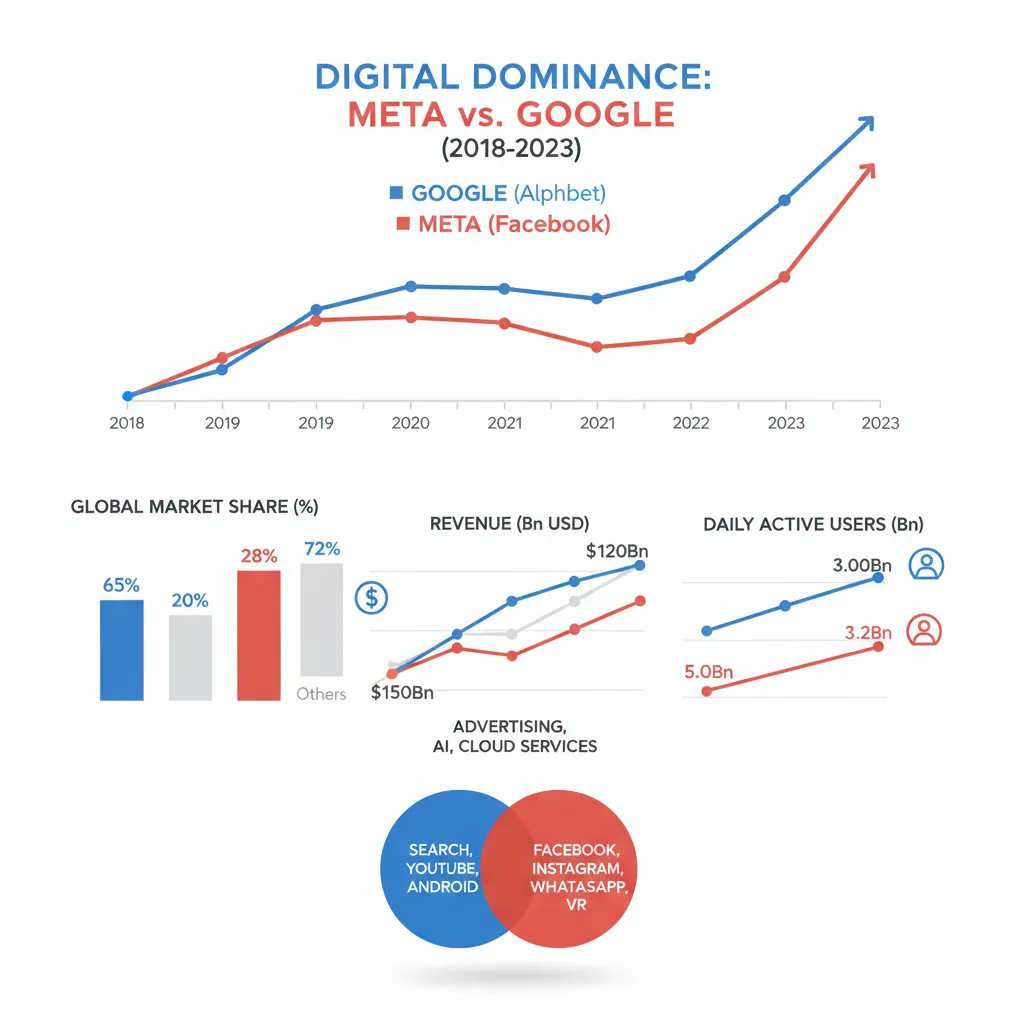
Visual Breakdown: meta vs google 2026 updates
The Battle for Advertising Dollars
Both Meta and Google have built their business models around the lucrative digital advertising industry, and the competition between the two companies for a larger share of this market is fiercely contested. As consumer behavior and media consumption patterns continue to evolve, the ability of these tech giants to adapt and offer targeted, innovative advertising solutions will be a key determinant of their future success.
The Advertising Arms Race: Meta vs. Google
The Importance of Regulatory Scrutiny
As Meta and Google continue to expand their influence, they have also faced increasing scrutiny from regulators and policymakers around the world. Issues such as data privacy, antitrust concerns, and the potential societal impacts of their platforms have put these tech giants under the microscope. The ability of these companies to navigate the evolving regulatory landscape will be crucial in shaping the digital landscape of the future.
Navigating the Regulatory Minefield: Meta and Google’s Challenges Ahead
Conclusion
As we look ahead to 2026, the battle between Meta and Google for digital supremacy promises to be intense and multifaceted. While both companies possess formidable strengths and resources, their ability to adapt to changing consumer preferences, technological advancements, and regulatory environments will be the key to their long-term success. The outcome of this epic clash will undoubtedly have far-reaching implications for the future of the digital world.
}